Transforming Retail Customer Support with Gen AI
Background
The automation team introduced generative AI to streamline support operations. Early pilots launched internally across departments to learn usage patterns before customer-facing releases.
Johanna drove the end-to-end UX update from a traditional logic-tree bot to a hybrid experience combining structured flows with generative responses.
Research
Johanna gathered feedback through focus groups and a diary study for an MVP bot, then iterated on the conversation design and UI based on observed failure modes and user prompts. Focus group learnings informed a user journey map that highlighted where users lost confidence, where answers became too long, and when guidance was needed.
Moving to Gen AI changed both interaction patterns and trust requirements. Users needed clearer system guidance, source transparency, and help asking effective follow-up questions.
Solution
Short, predictable responses fit compact chat UI patterns.
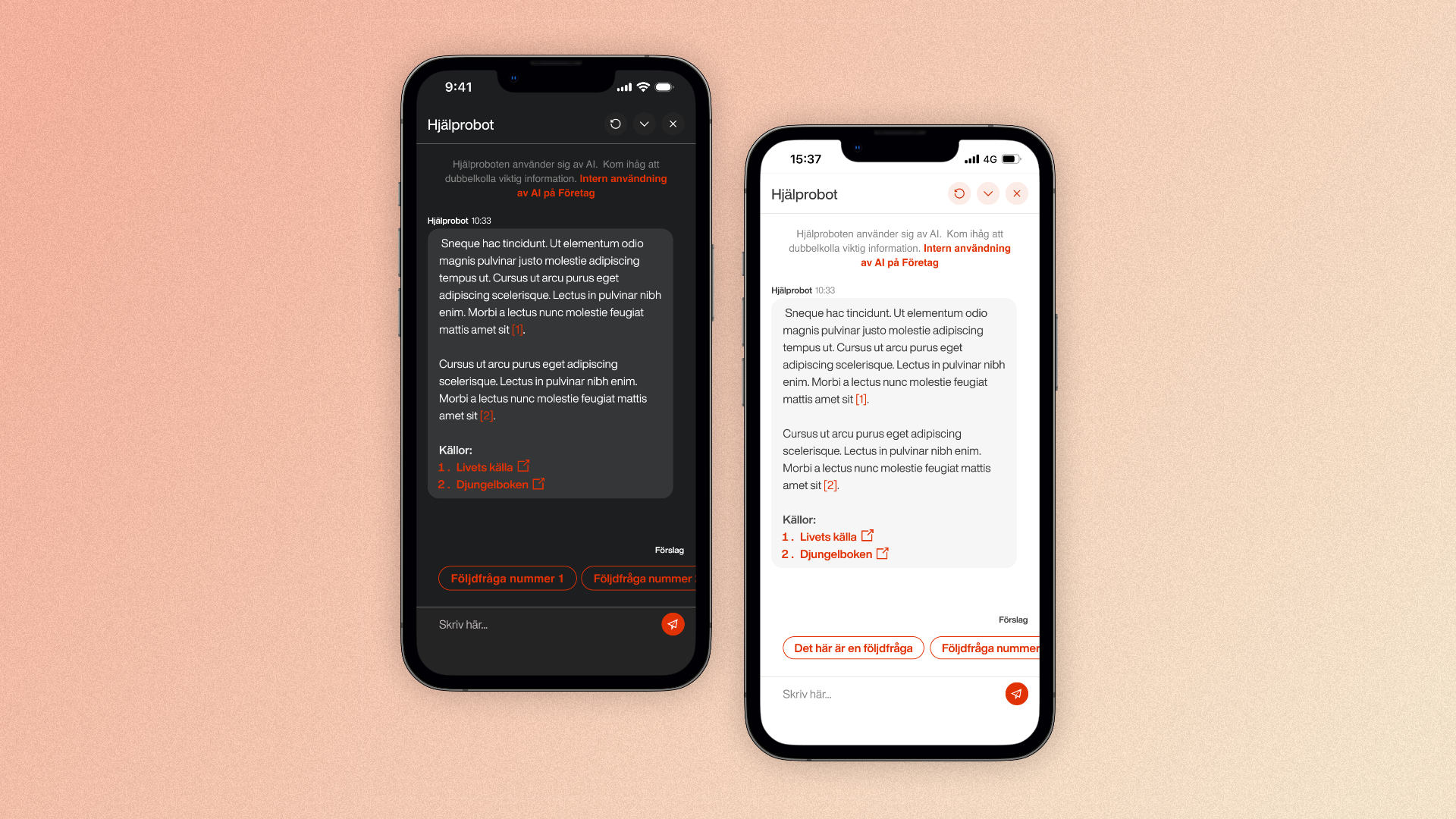
Message layout and bubble sizing accommodated longer Gen AI responses without becoming unreadable.
Logic-tree replies did not require citations or explanation of why information was requested.
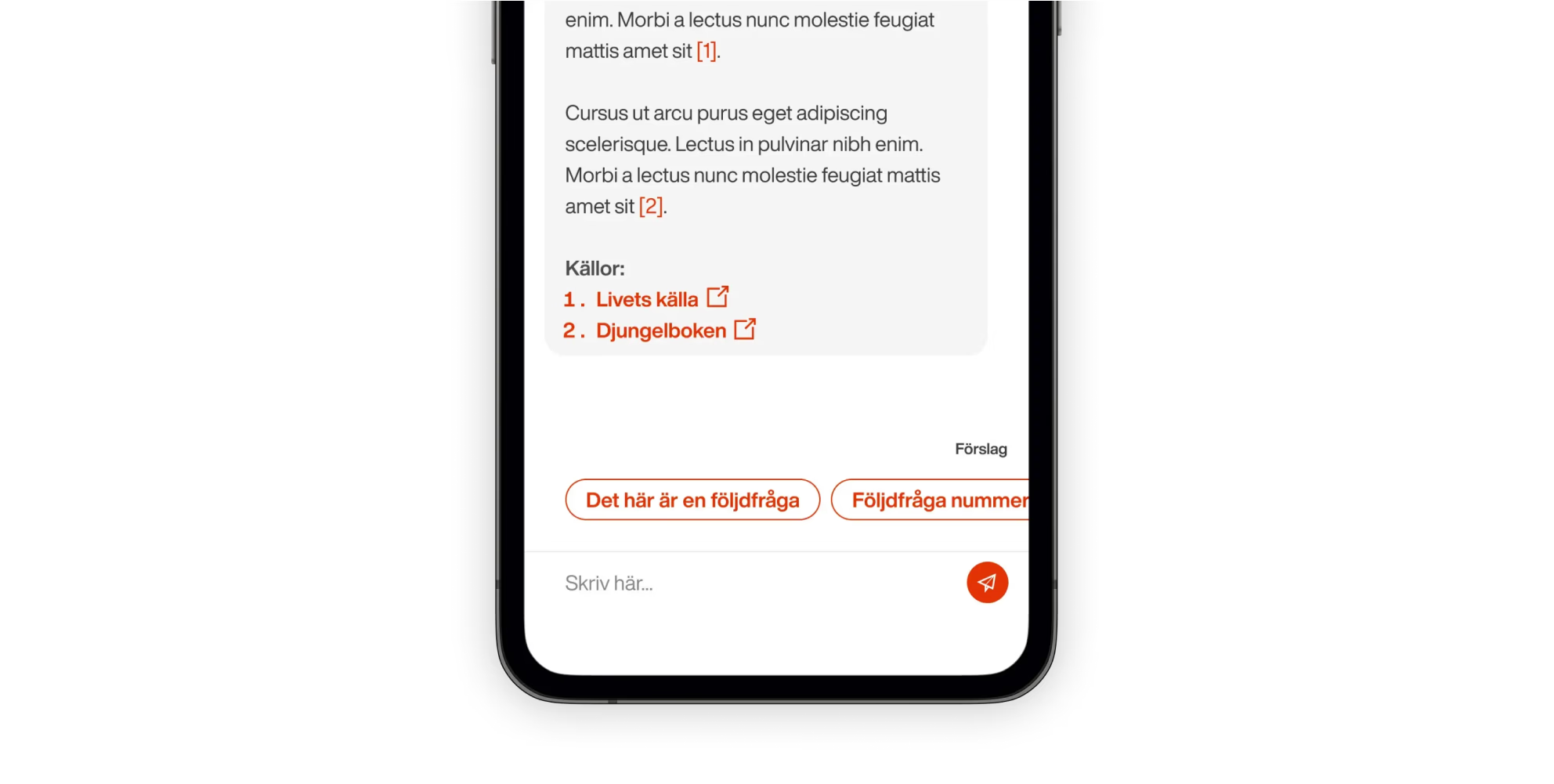
Sources and system messages supported trust by clarifying where answers came from and how to interpret them.
Tree paths constrained user input but reduced ambiguity.
Follow-up prompts and example questions guided users toward better inputs and more accurate answers.
The chatbot lived outside the primary work context.
Integration into Microsoft Teams made the assistant available where employees already worked.
Results
• Three pilots launched in fall 2024, all approved for continuation and scale-up • Additional departments requested AI bots • Work to support partially AI-driven tools for customer support agents was approved
• A hybrid model paired Gen AI flexibility with structured guidance • Designing prompts, system messages, and source presentation was essential for sustained user trust
Midyear review feedback
@Deloitte Digital
“Johanna demonstrates a very high level of maturity, understanding problems thoroughly, and engaging with various stakeholders within the studio. Her impressive problem-solving ability is comparable to that of much more senior resources.”
Transforming Retail Customer Support with Gen AI
Background
The automation team introduced generative AI to streamline support operations. Early pilots launched internally across departments to learn usage patterns before customer-facing releases.
Johanna drove the end-to-end UX update from a traditional logic-tree bot to a hybrid experience combining structured flows with generative responses.
Research
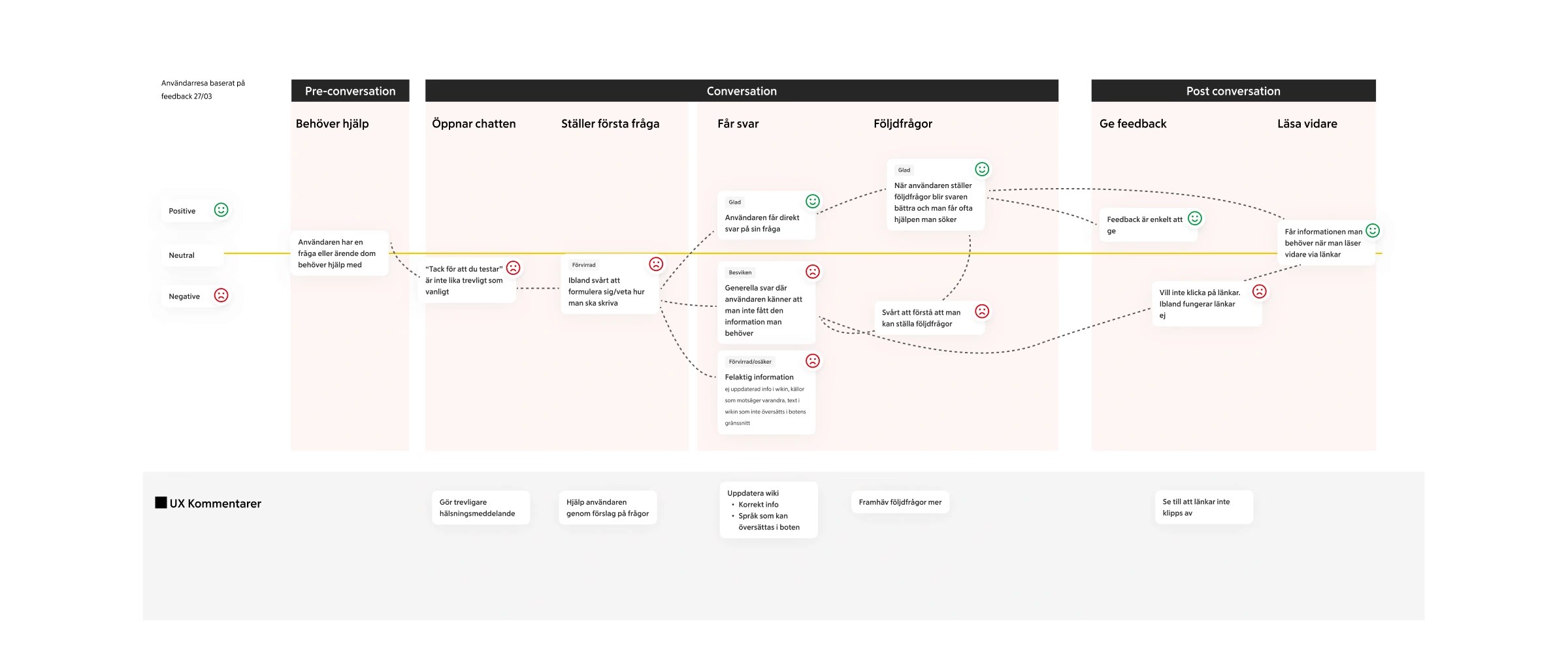
Johanna gathered feedback through focus groups and a diary study for an MVP bot, then iterated on the conversation design and UI based on observed failure modes and user prompts. Focus group learnings informed a user journey map that highlighted where users lost confidence, where answers became too long, and when guidance was needed.
Moving to Gen AI changed both interaction patterns and trust requirements. Users needed clearer system guidance, source transparency, and help asking effective follow-up questions.
Solution
Short, predictable responses fit compact chat UI patterns.
Message layout and bubble sizing accommodated longer Gen AI responses without becoming unreadable.
Logic-tree replies did not require citations or explanation of why information was requested.
Sources and system messages supported trust by clarifying where answers came from and how to interpret them.
Tree paths constrained user input but reduced ambiguity.
Follow-up prompts and example questions guided users toward better inputs and more accurate answers.
The chatbot lived outside the primary work context.
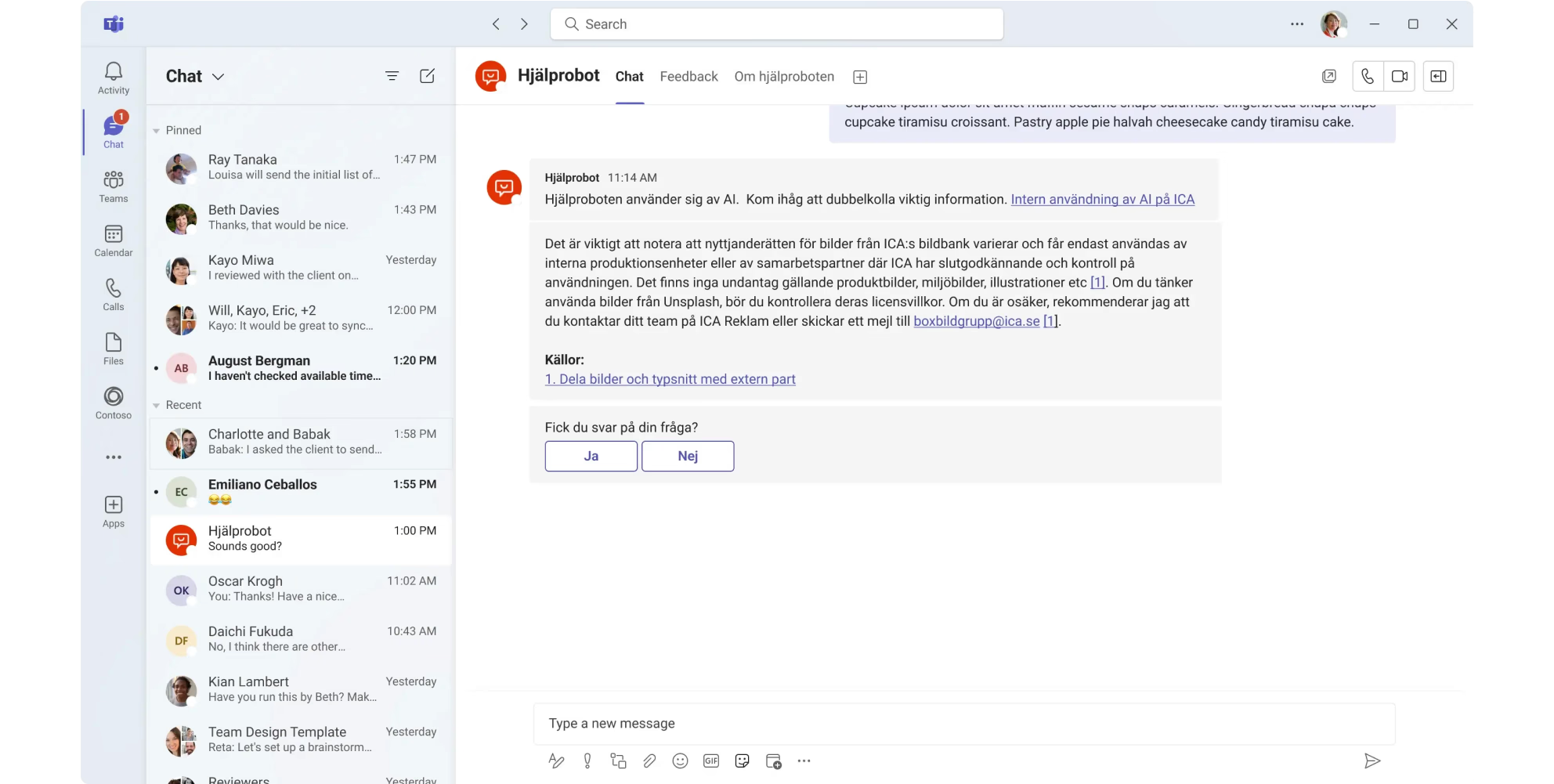
Integration into Microsoft Teams made the assistant available where employees already worked.
Results
• Three pilots launched in fall 2024, all approved for continuation and scale-up • Additional departments requested AI bots • Work to support partially AI-driven tools for customer support agents was approved
• A hybrid model paired Gen AI flexibility with structured guidance • Designing prompts, system messages, and source presentation was essential for sustained user trust
Midyear review feedback
@Deloitte Digital
“Johanna demonstrates a very high level of maturity, understanding problems thoroughly, and engaging with various stakeholders within the studio. Her impressive problem-solving ability is comparable to that of much more senior resources.”